
A Living Theatre of the Everyday
The Kitchen
A sharply observed, deeply human work that turns an ordinary space into a site of revelation. This is not a story set in a kitchen. It is life unfolding inside one.
Noisy, messy, human and alive
The Kitchen lives in a state of perpetual motion. Orders fly across the room. Tasks collide. Tempers flare, then soften. Laughter slips in through the cracks of exhaustion. It’s noisy, messy, human, and alive.
Conceived and directed by Roysten Abel, the production turns its gaze toward what usually goes unseen: labour and routine, hierarchy and fatigue, the quiet negotiations that take place behind closed doors. By centering a working kitchen, Abel transforms the everyday into dramatic terrain. Power reveals itself through timing, tone, and access. Hierarchy lives in gesture. Silence often says more than words ever could.
This is theatre that resists spectacle. There’s no grand storyline to follow; only observation. Lives intersect through repetition and necessity. Meaning emerges not through explanation, but through attention. What results is theatre stripped of ornament: precise, physical, and quietly political.
The performance
Human
Physical
Observational
Inviting empathy without instruction
The ordinary as theatre
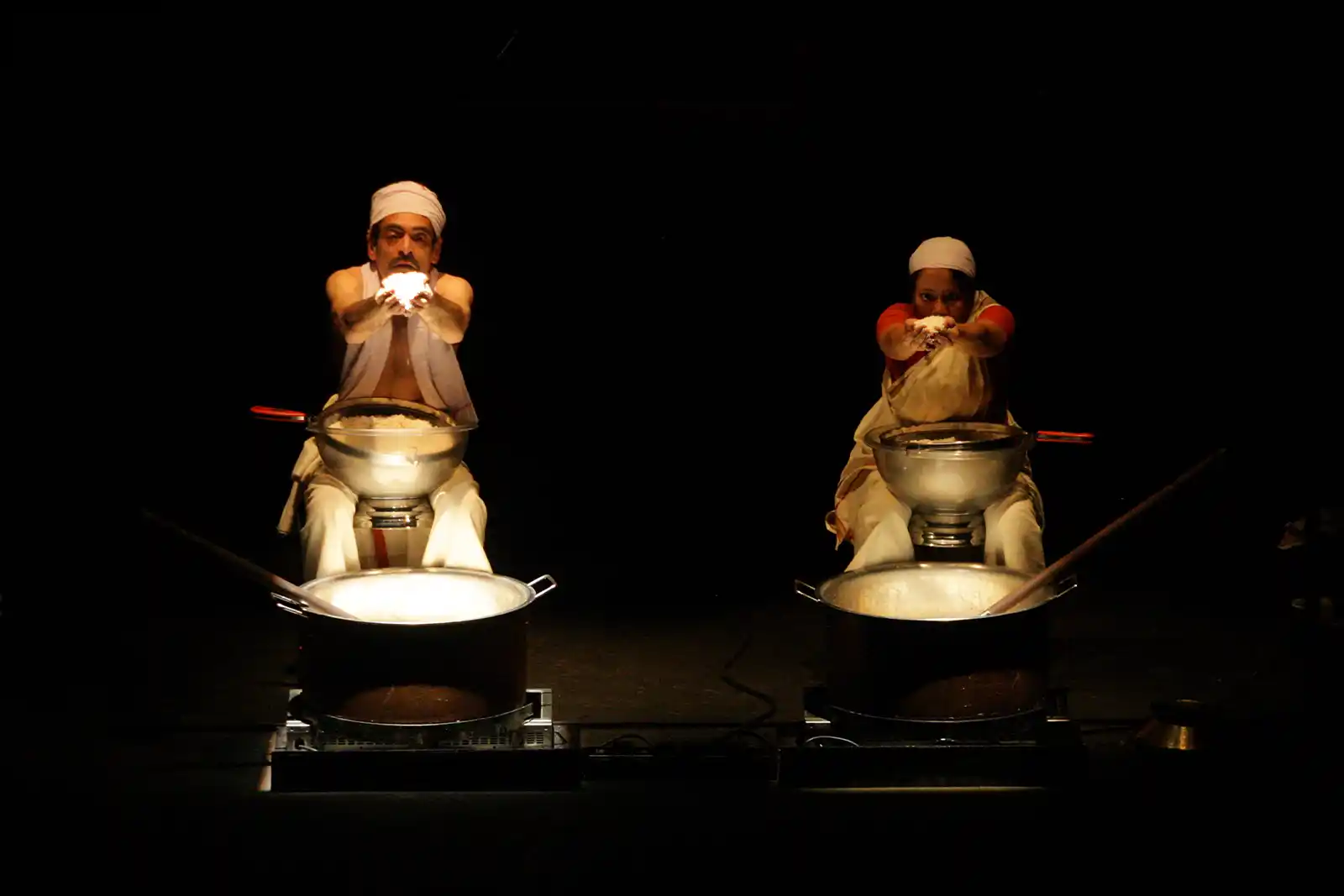

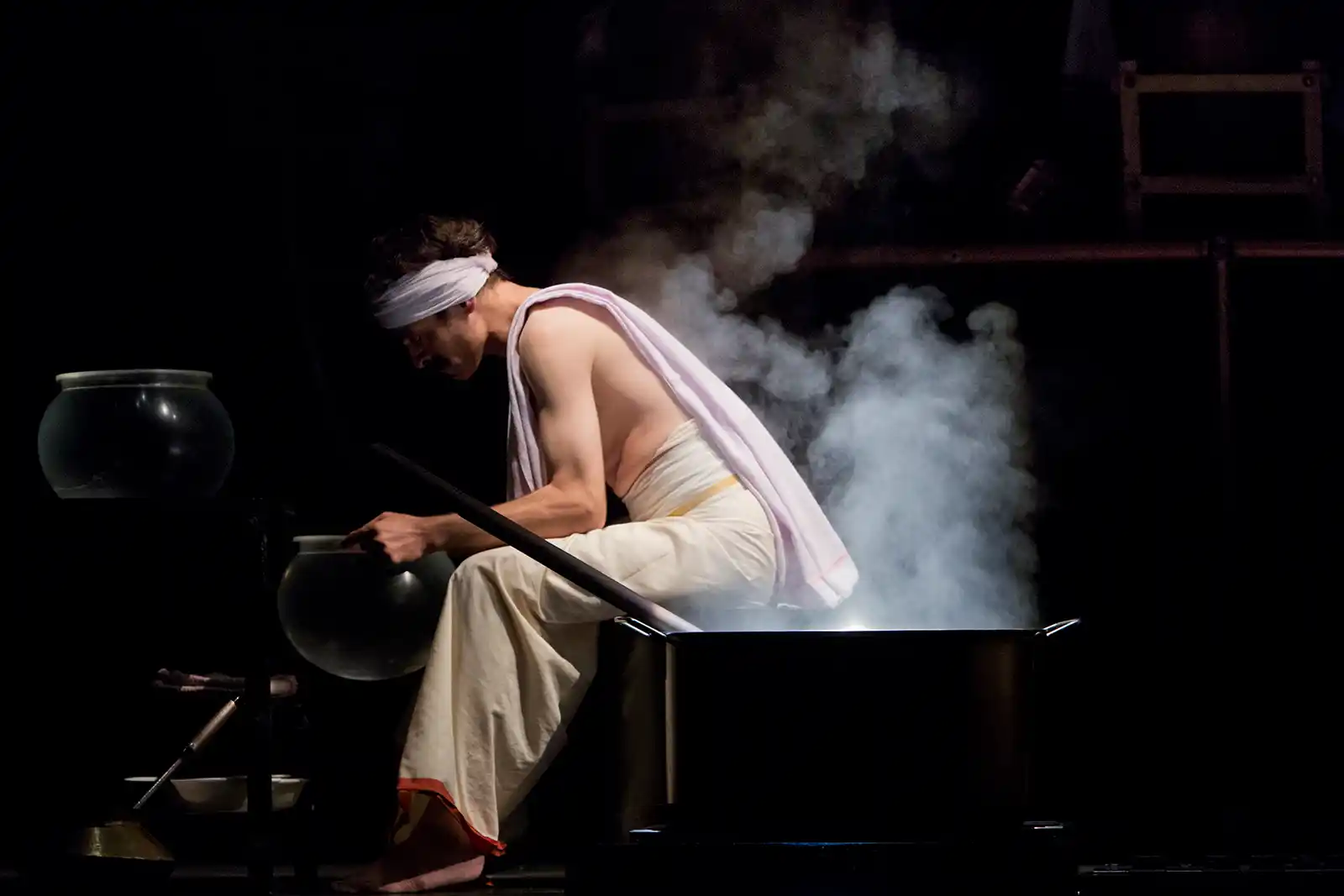
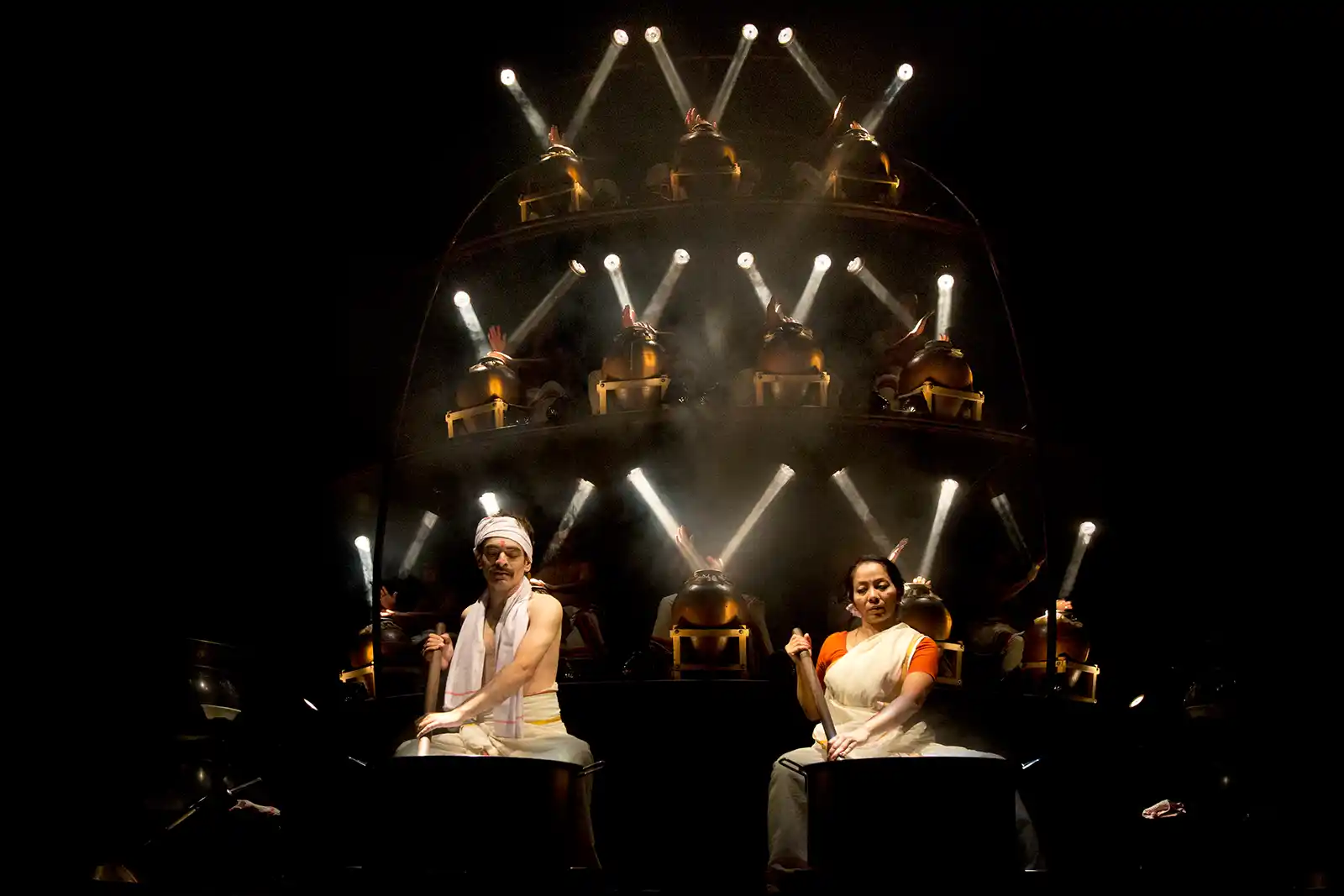
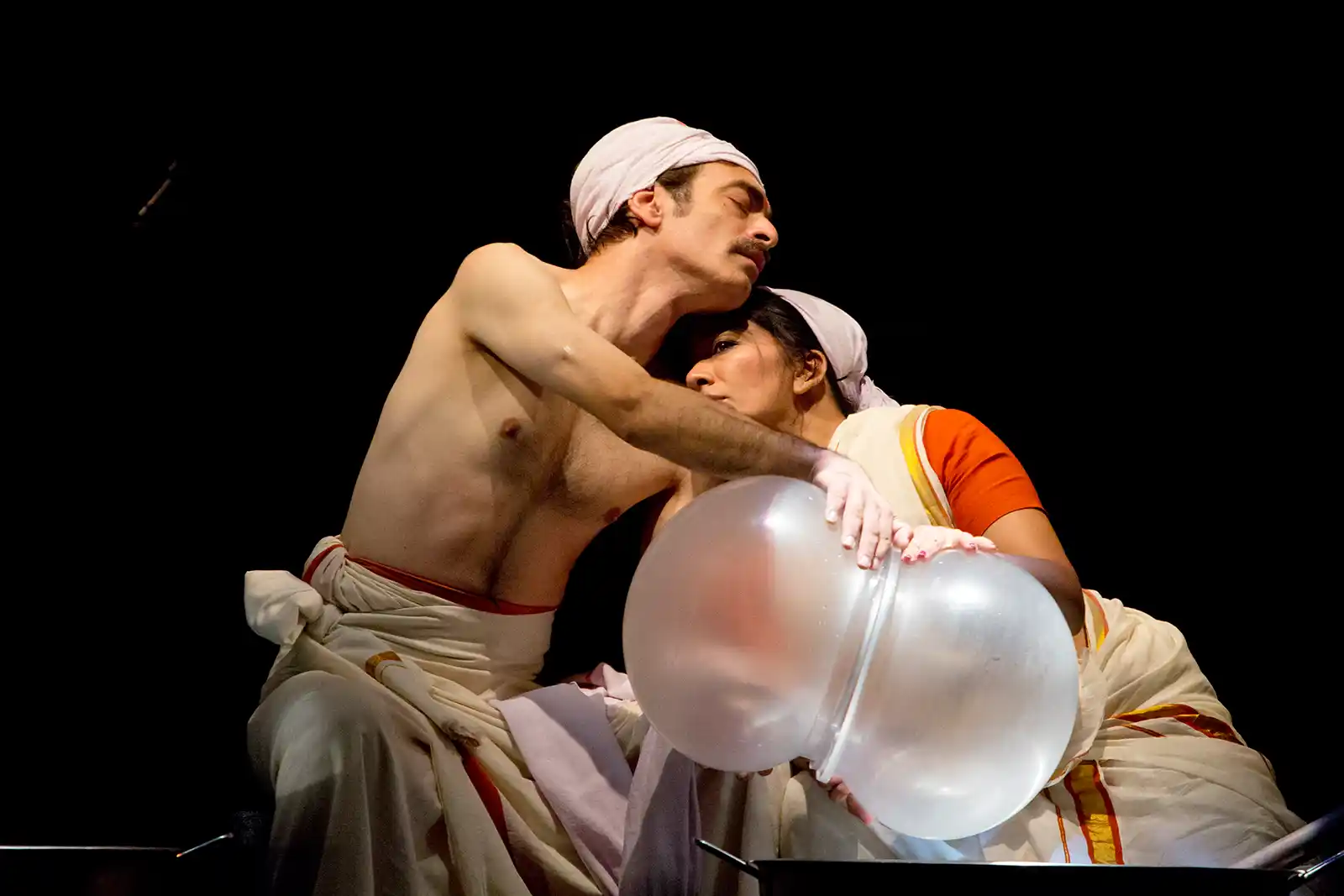
The body sits at the heart of The Kitchen. Movement grows out of labour rather than choreography. Repetition leaves traces. Exhaustion accumulates. Skill shows itself in speed, economy, and restraint. The performers don’t represent work—they inhabit it. Their actions feel lived-in, tactile, unsentimental. The audience is invited to witness effort, endurance, and presence, and to draw meaning from them naturally.
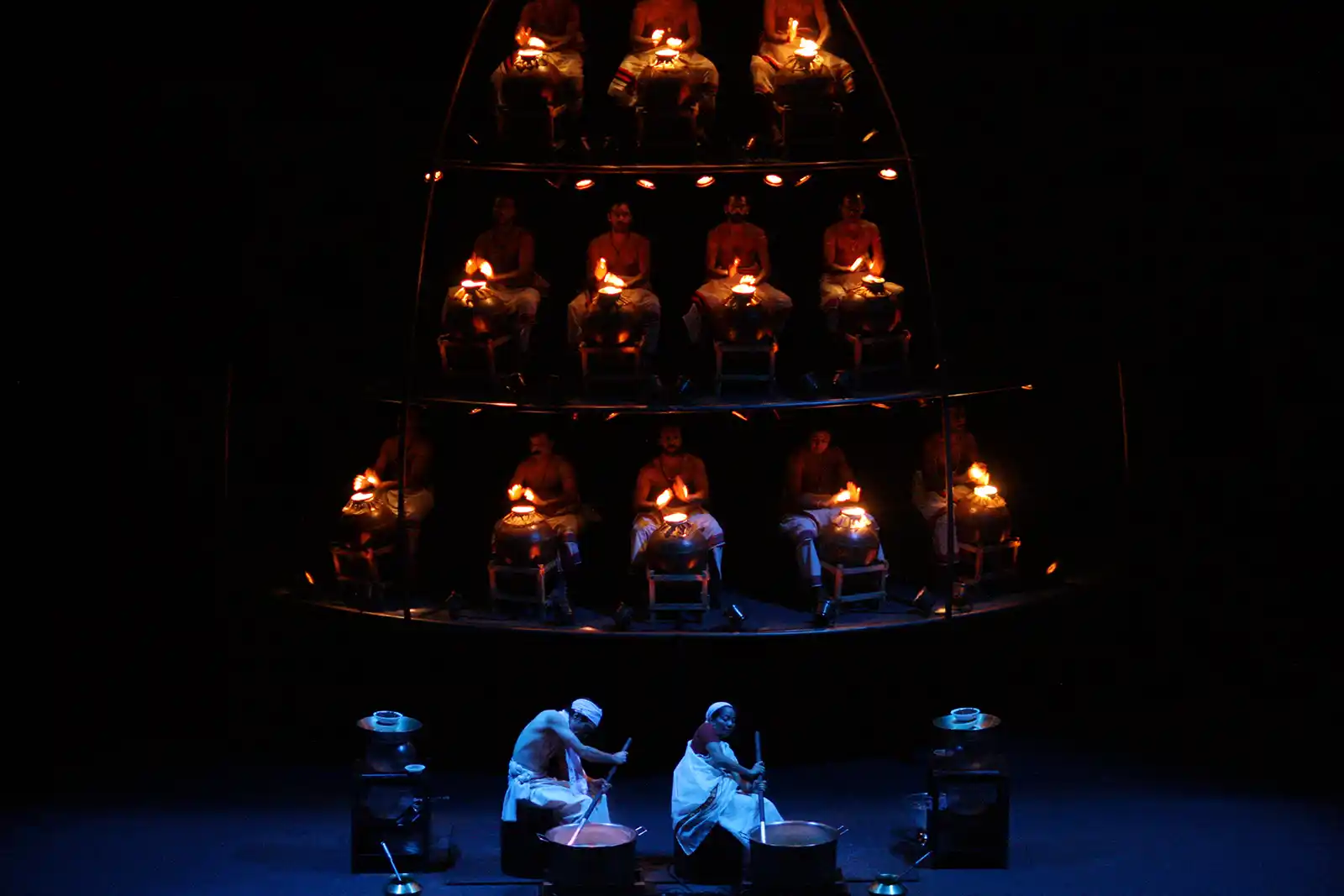
At the center of the stage, two performers—playing a married but estranged couple—prepare paal payasam, a traditional South Indian sweet, in large copper pots. There is no dialogue. Instead, the simple act of cooking unfolds into a quiet emotional journey toward reconciliation. Every gesture carries weight. The ordinary becomes intimate. The domestic becomes profound.
Encircling this scene are twelve mizhavu drummers from Kerala, seated atop a towering structure. Their rhythms pulse and shift with the pace of the cooking and the emotional temperature of the performers. Sound, scent, and movement accumulate, slowly building a trance-like atmosphere that blurs the line between performance and ritual.
The work draws inspiration from Abel’s visit to the shrine of the Sufi poet Rumi, where meditation, communal cooking, and spiritual preparation exist side by side. This idea of layered “cooking”—of food, bodies, and inner lives—becomes the conceptual spine of the piece.
In a final, generous gesture, the audience is invited to taste the payasam. Watching turns into participation. Theatre becomes communal again – shared, sensory, grounded. Ultimately, The Kitchen is less a play and more a ritual. A convergence of sight, sound, smell, taste, and emotion. Through the universal act of cooking, it offers a meditative reflection on labour, intimacy, and the slow, unseen processes that shape human life.