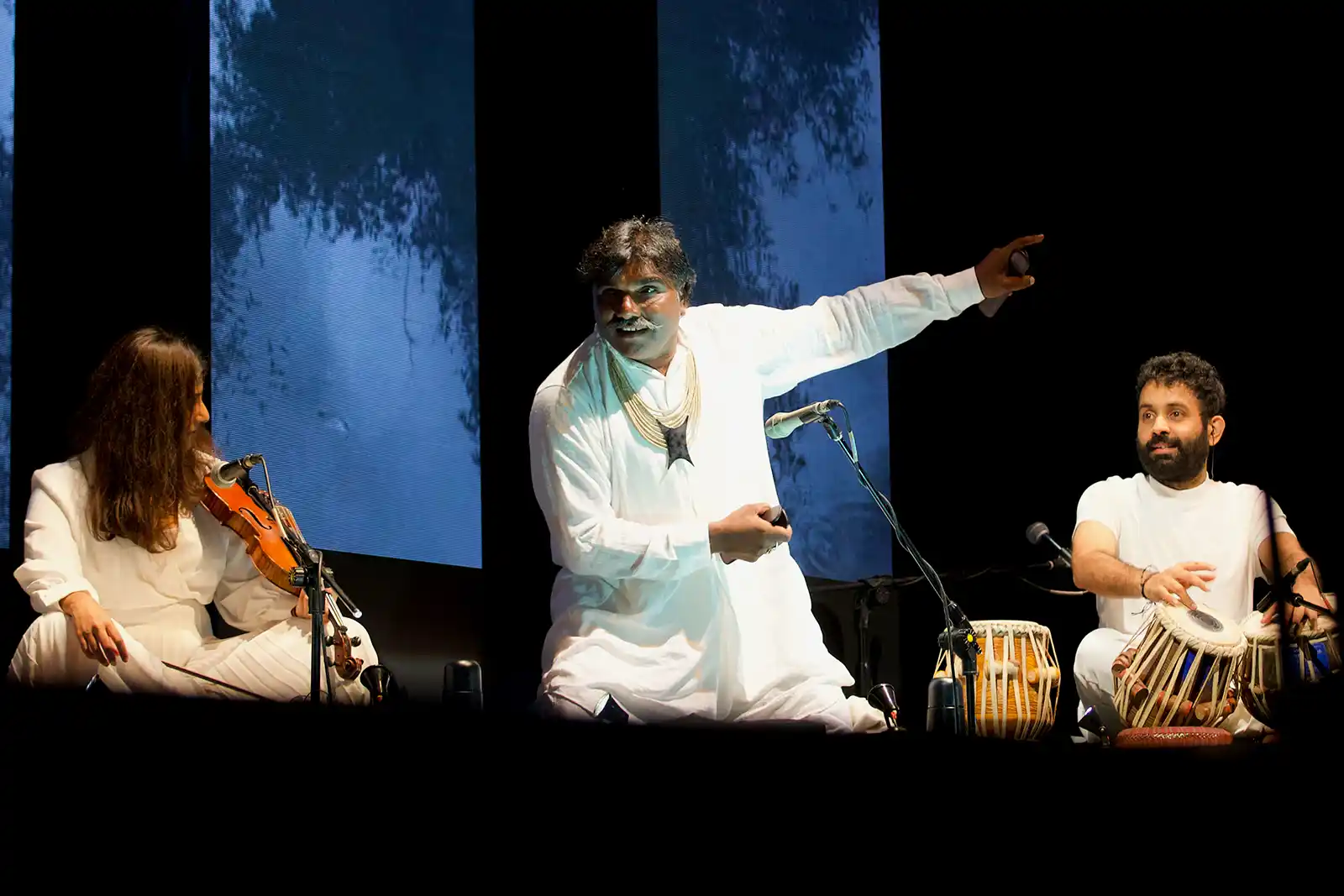
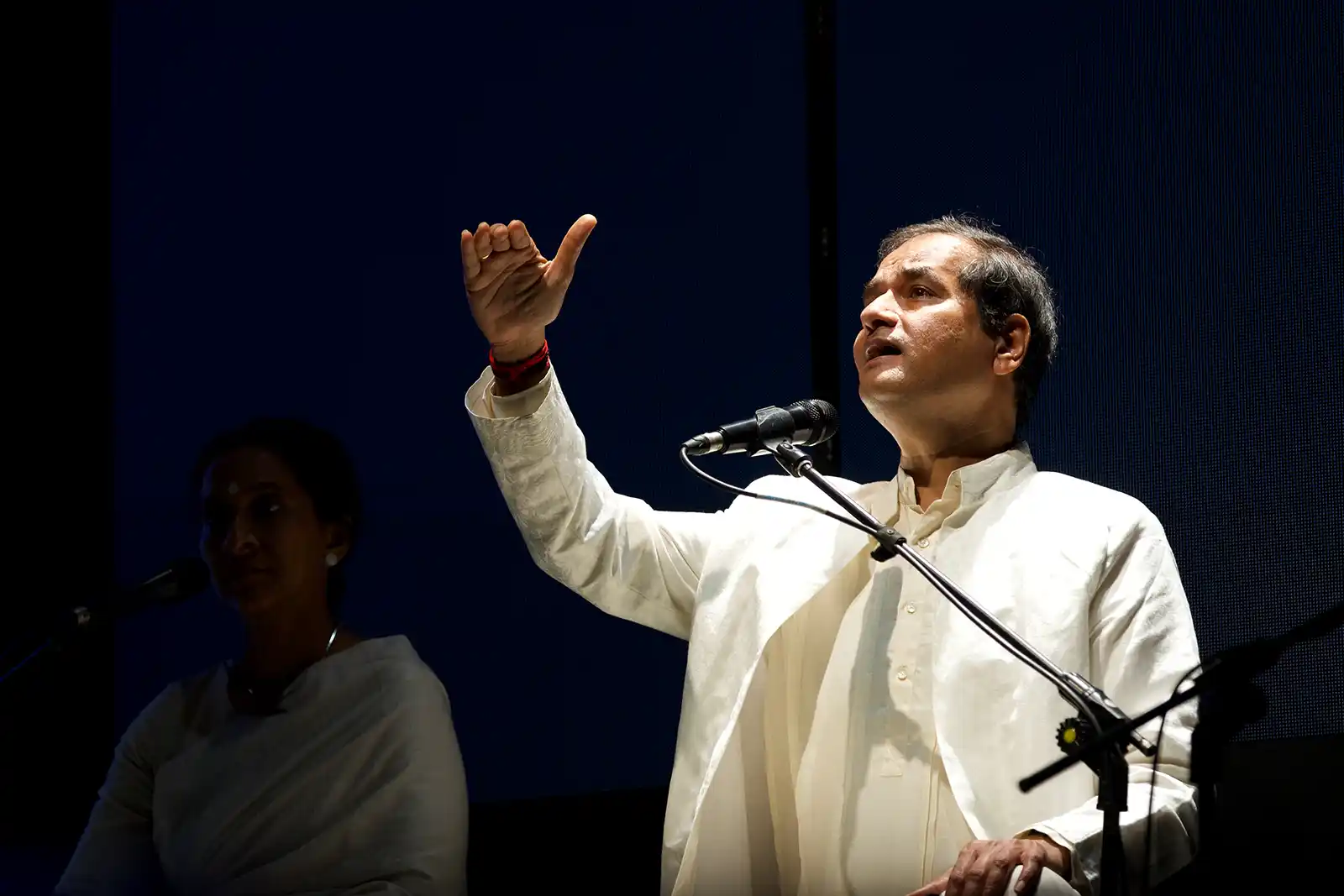
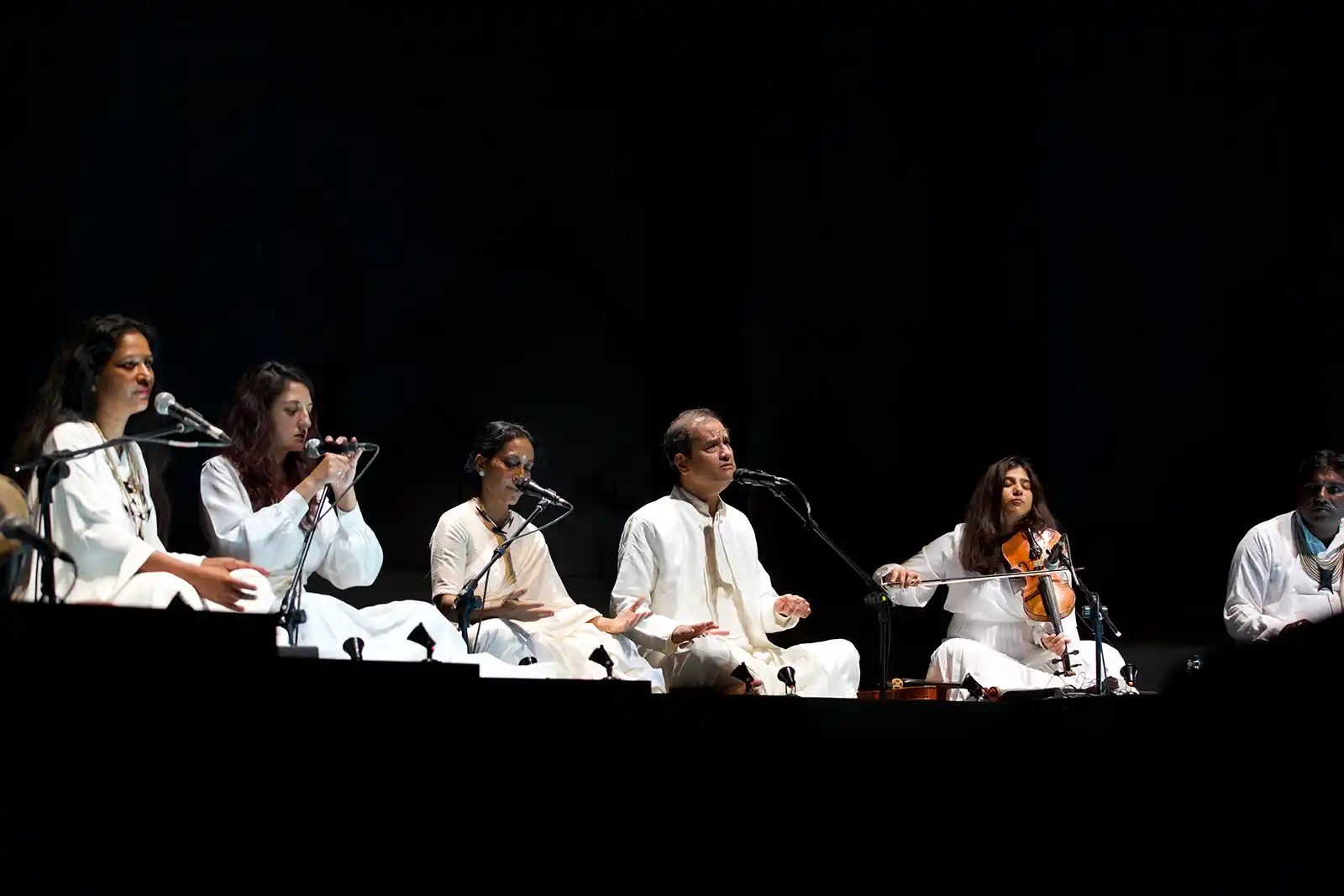
The structure follows a four-movement musical arc, echoing both dhrupad and the classical Western symphony – moving through longing, turbulence, intimacy, and love. The result is a journey that feels both rigorously composed and deeply personal.
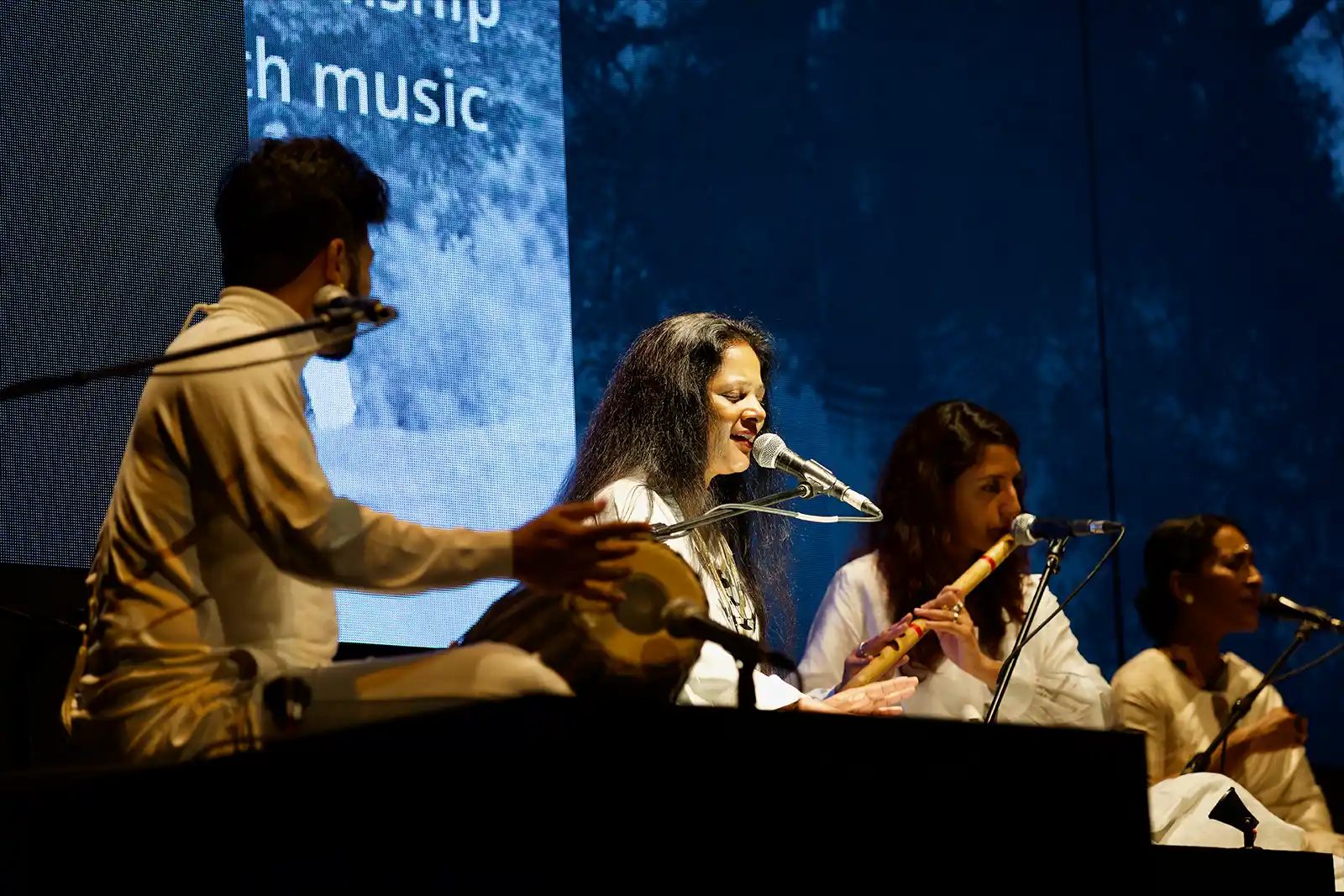
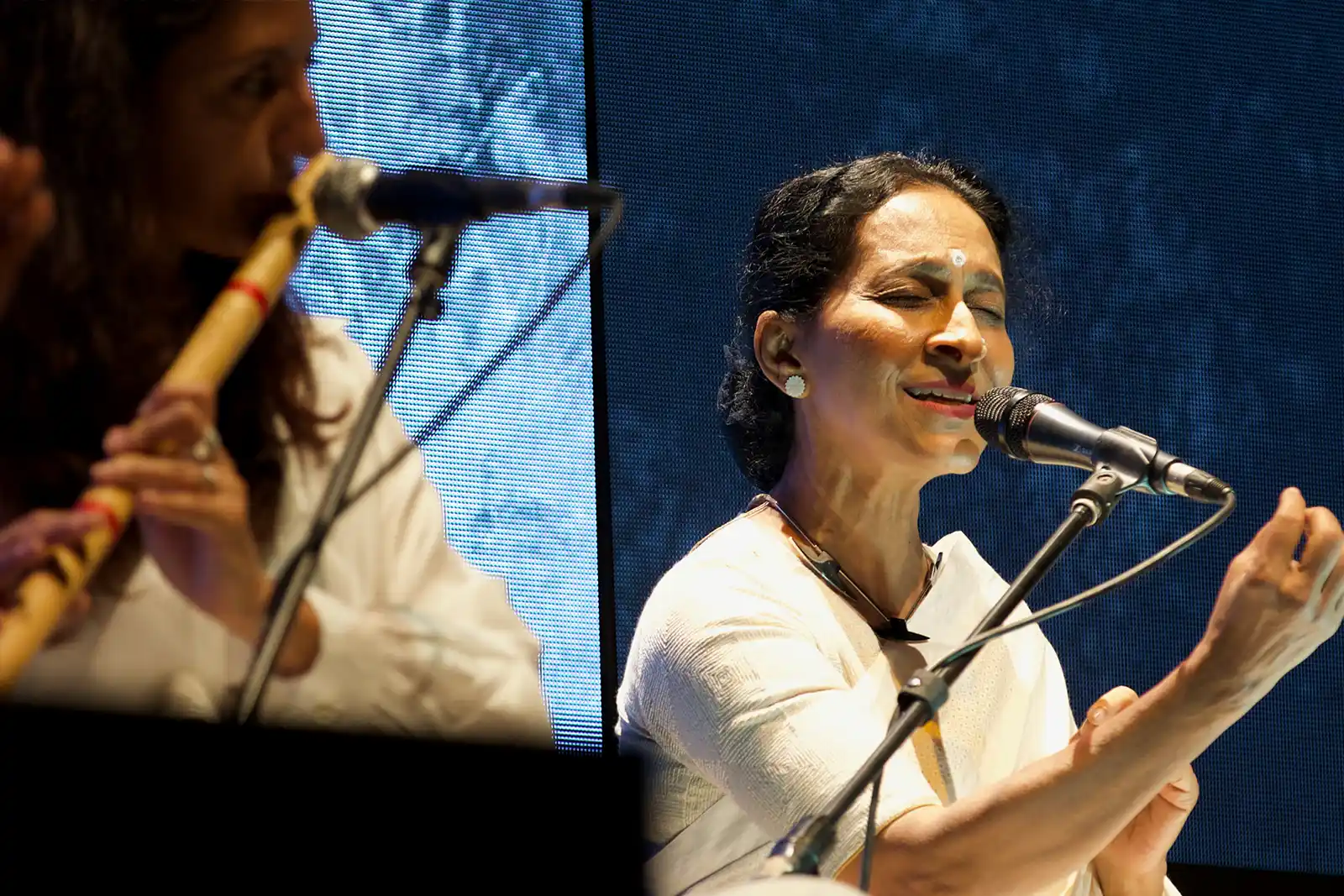
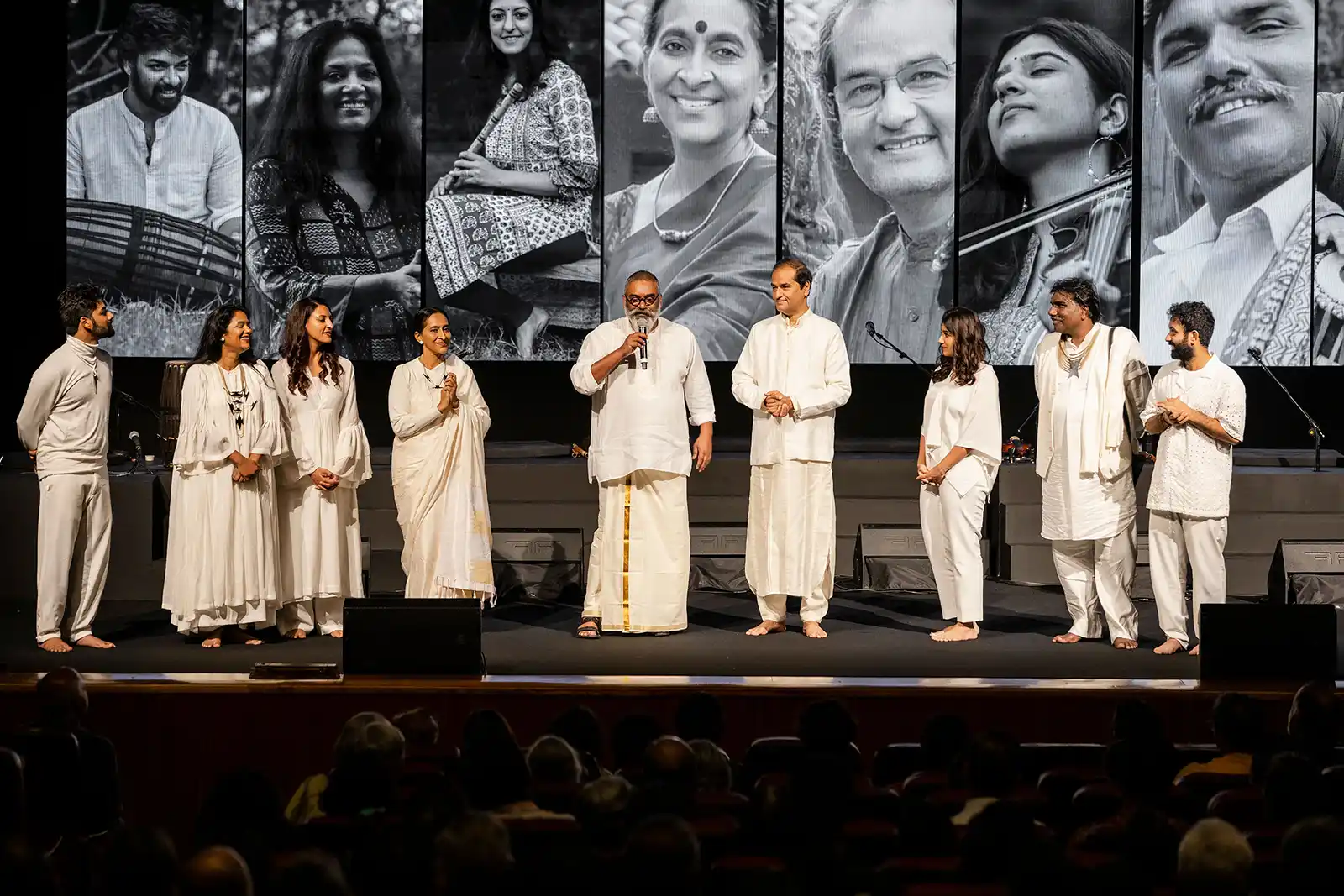
As the performance progresses, individual voices begin to converge, first in pairs, then in groups, until all eight come together in a soaring, collective crescendo.
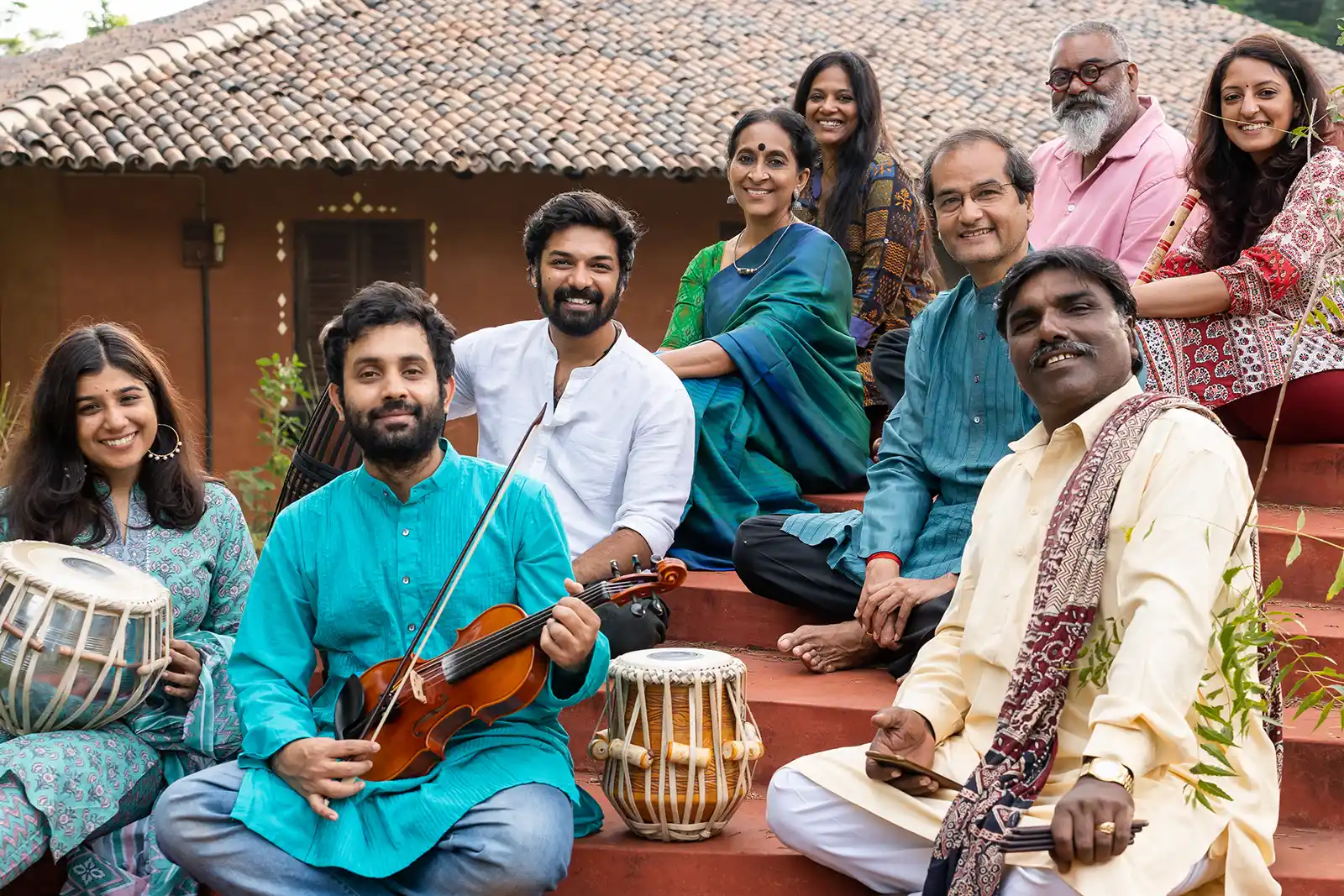
In a time marked by division and silenced voices, Weaving Voices asks a simple yet radical question: can very different musical languages journey together without losing themselves?
Carnatic, Dhrupad, Manganiyar music, Bhavageethe, Hindustani, and contemporary forms coexist; each retaining its integrity while contributing to a larger musical conversation.
The visual landscape of Weaving Voices draws from the post-pandemic moment, tracing each performer’s personal journey from their first encounter with music to the present.
These autobiographical fragments create an existential weave between life and art, allowing audiences to witness not just what the performers play, but why they play. The visual layer becomes a voice of its own – intimate, reflective, and quietly cathartic.